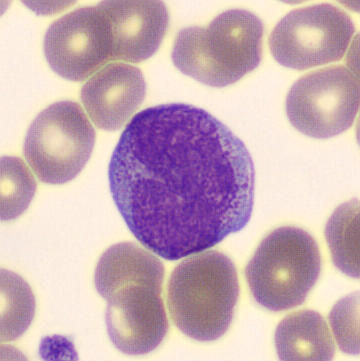
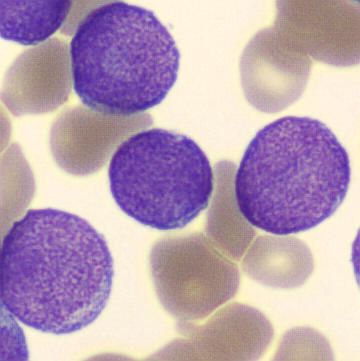
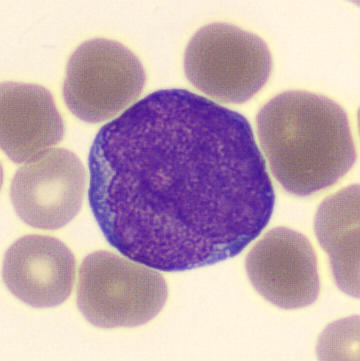
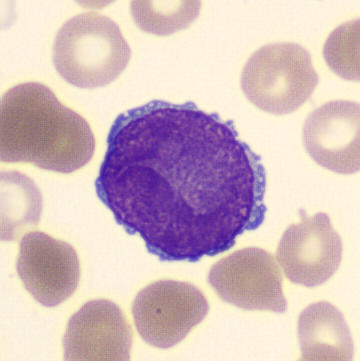
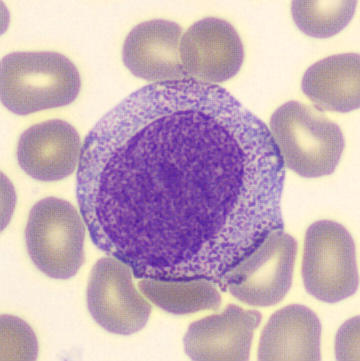
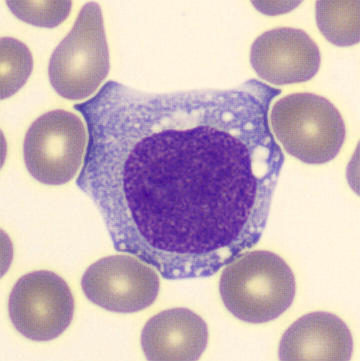
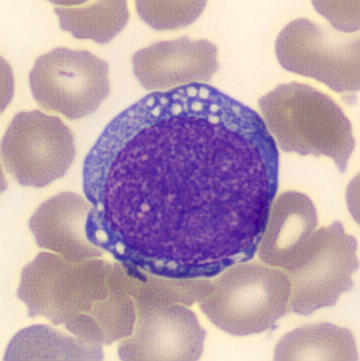
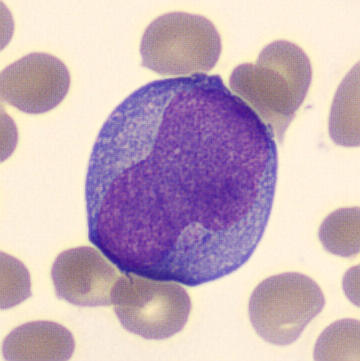
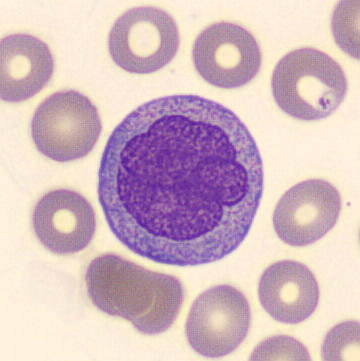
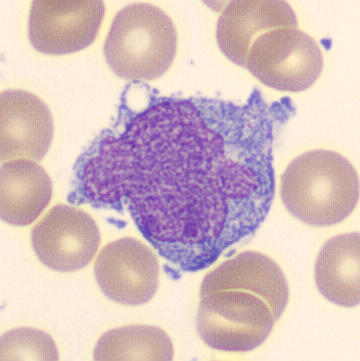
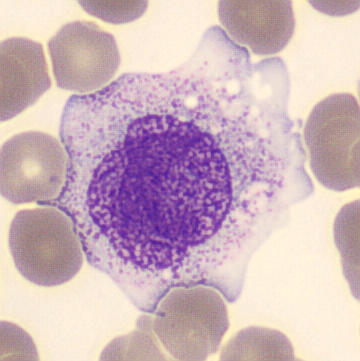
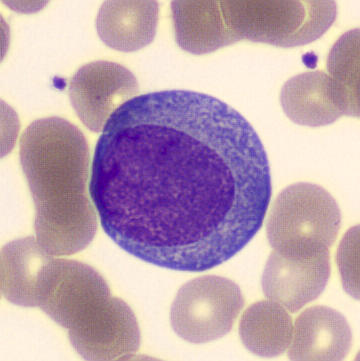
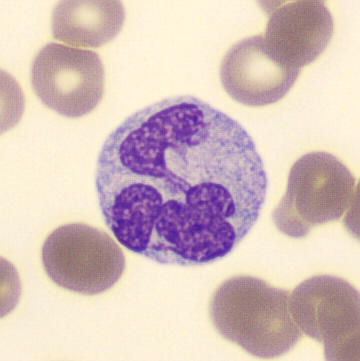
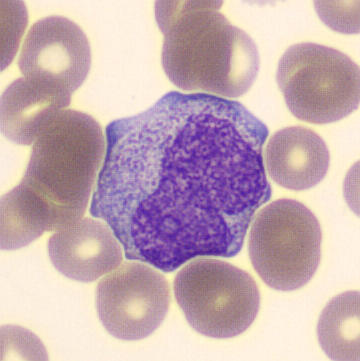
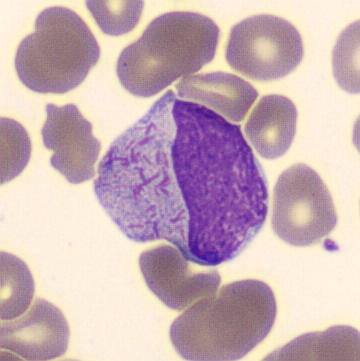
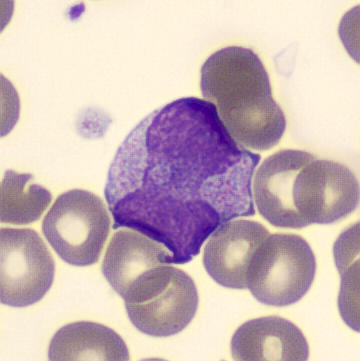
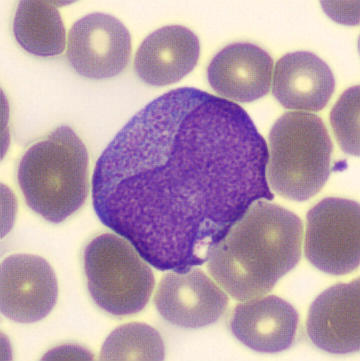
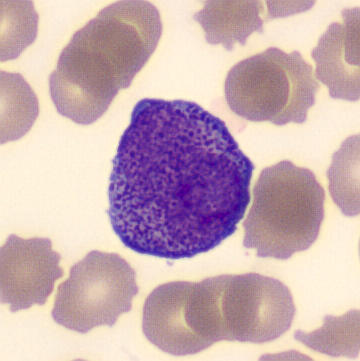
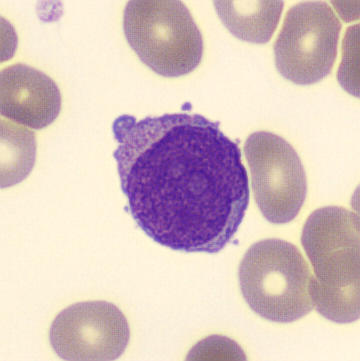
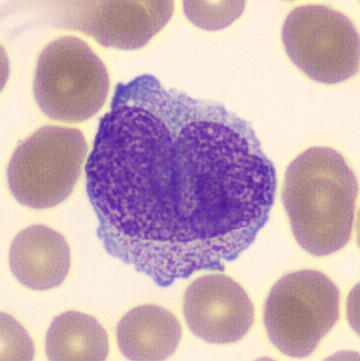
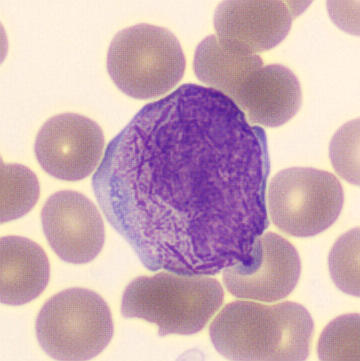
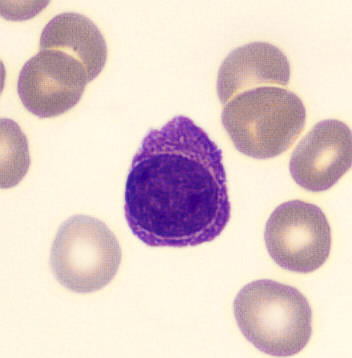
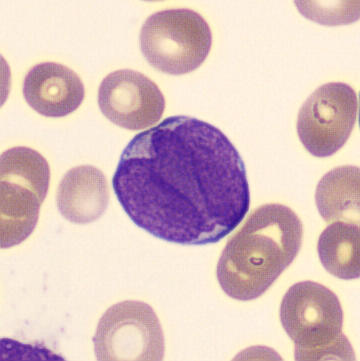
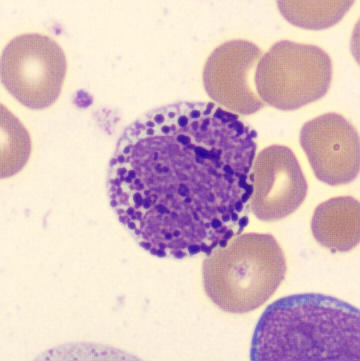
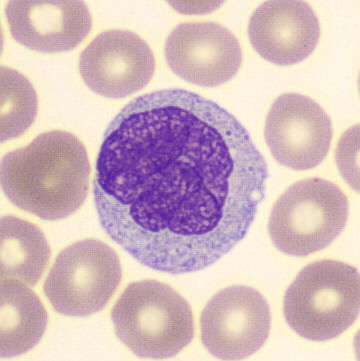
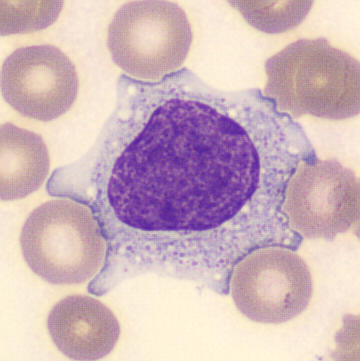
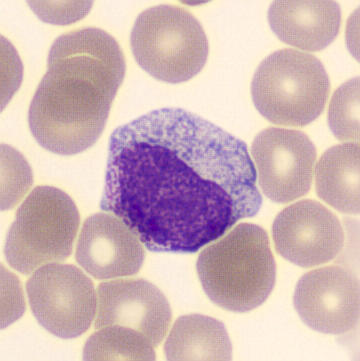
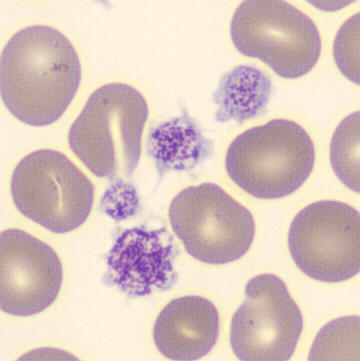
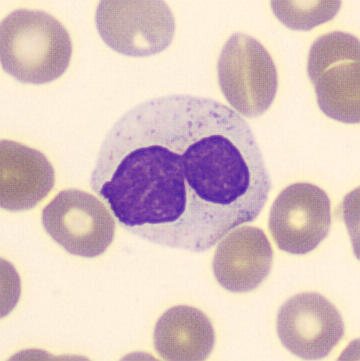
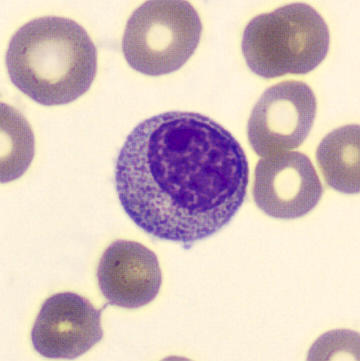
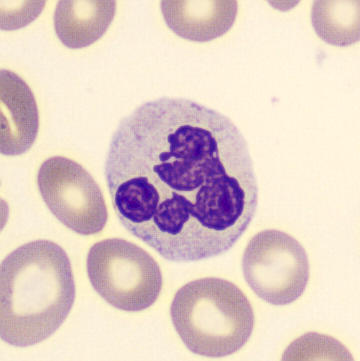
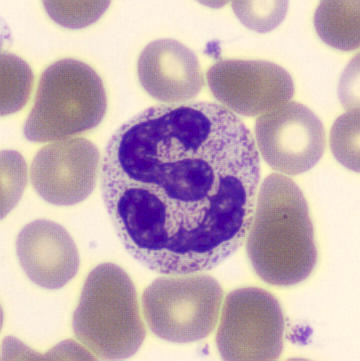
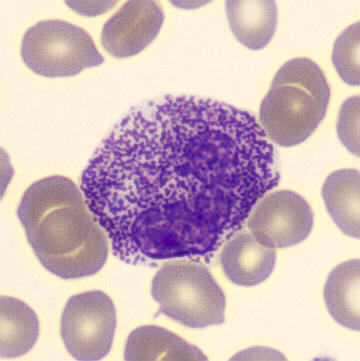
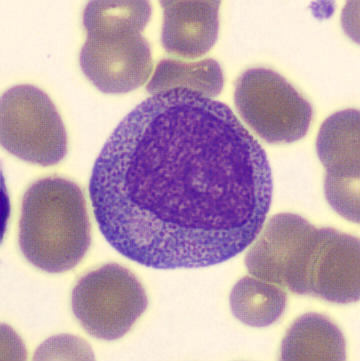
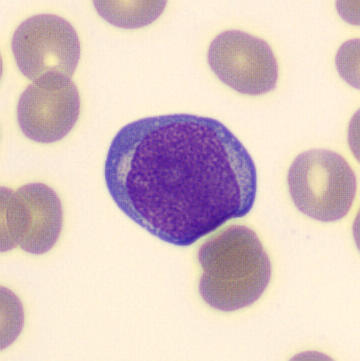
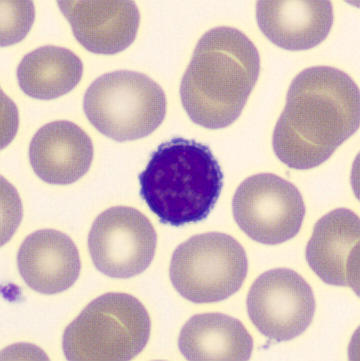
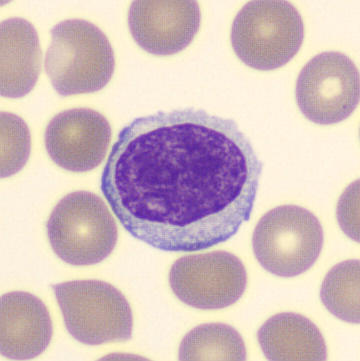
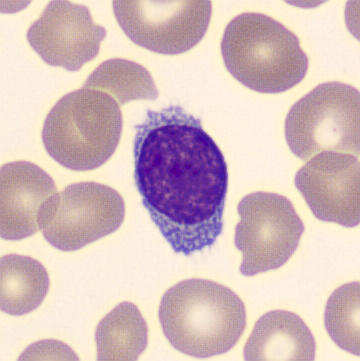
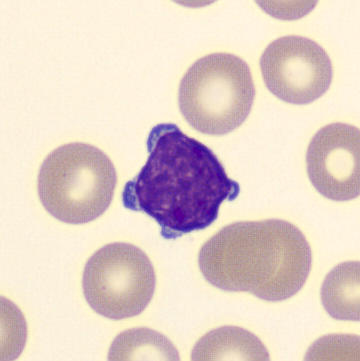
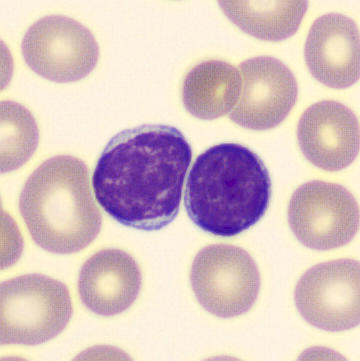
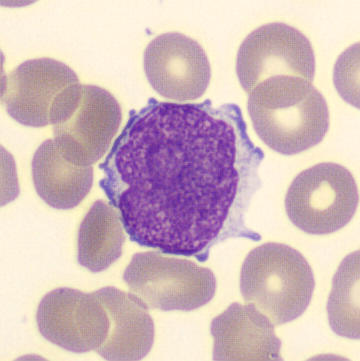

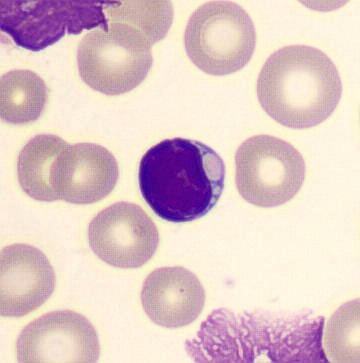
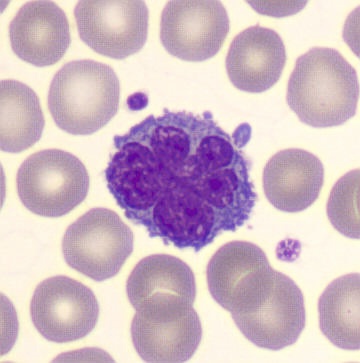
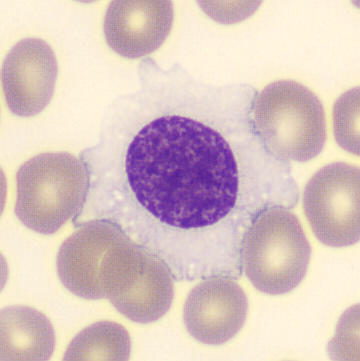
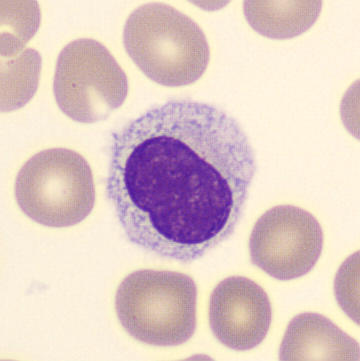
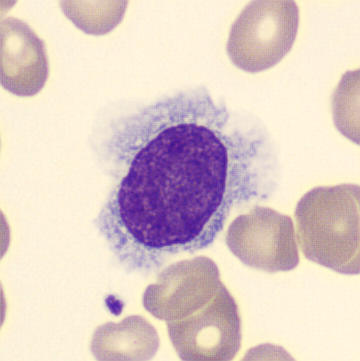
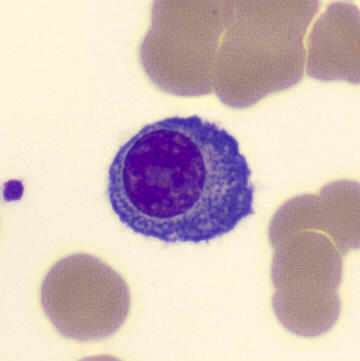
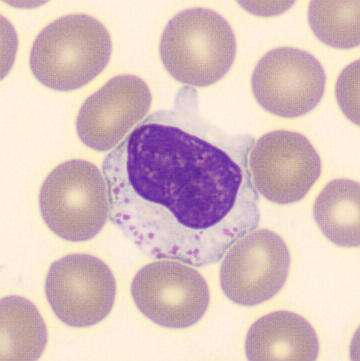
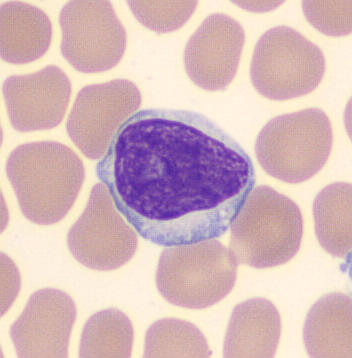
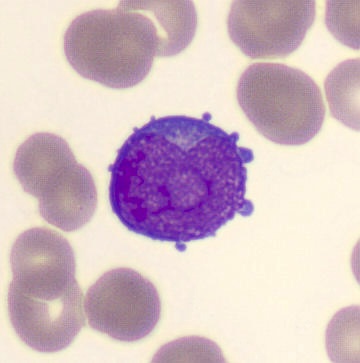

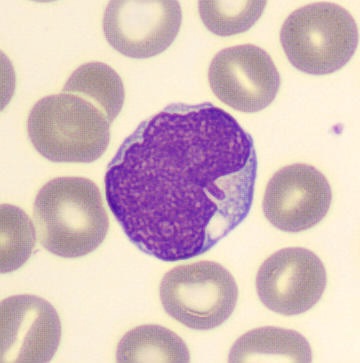
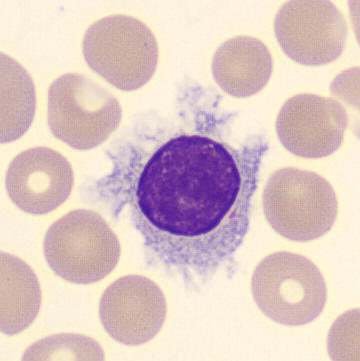
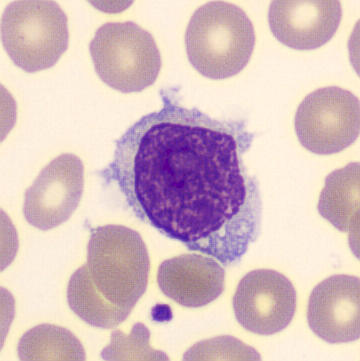
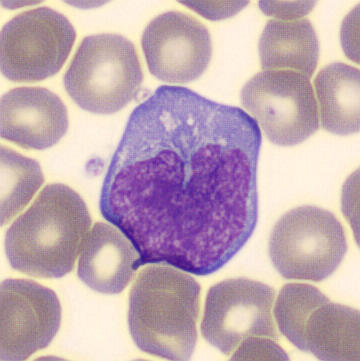
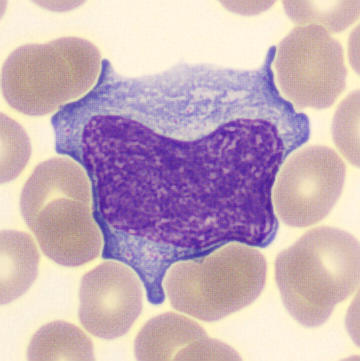
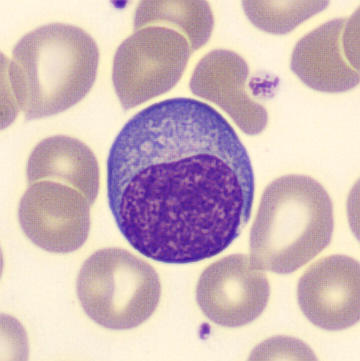
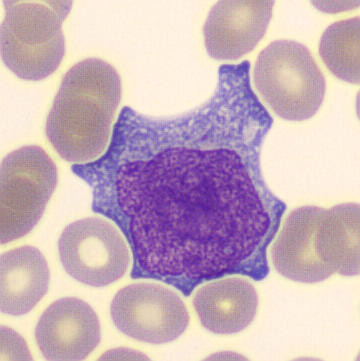
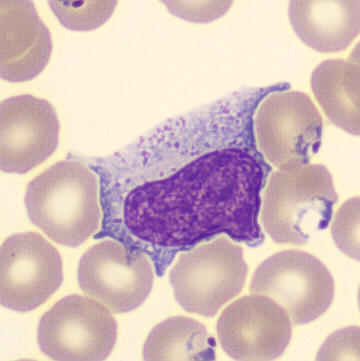

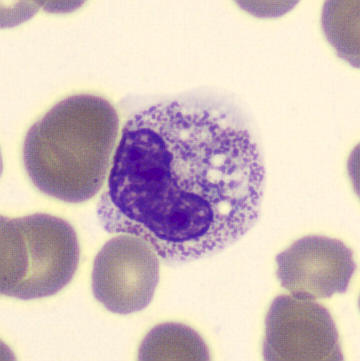
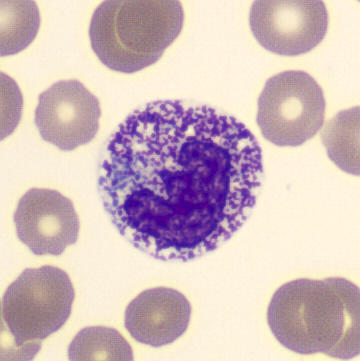
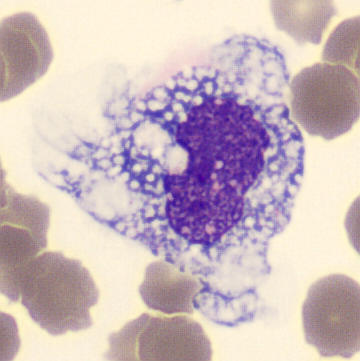
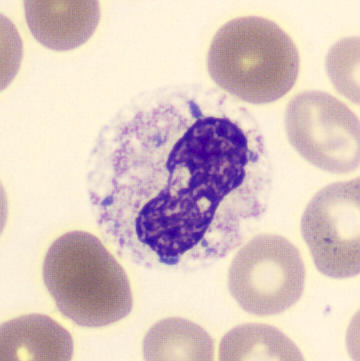
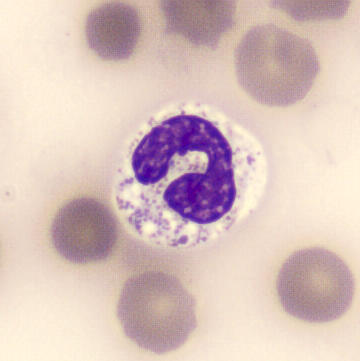
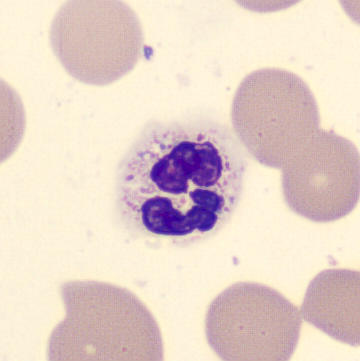

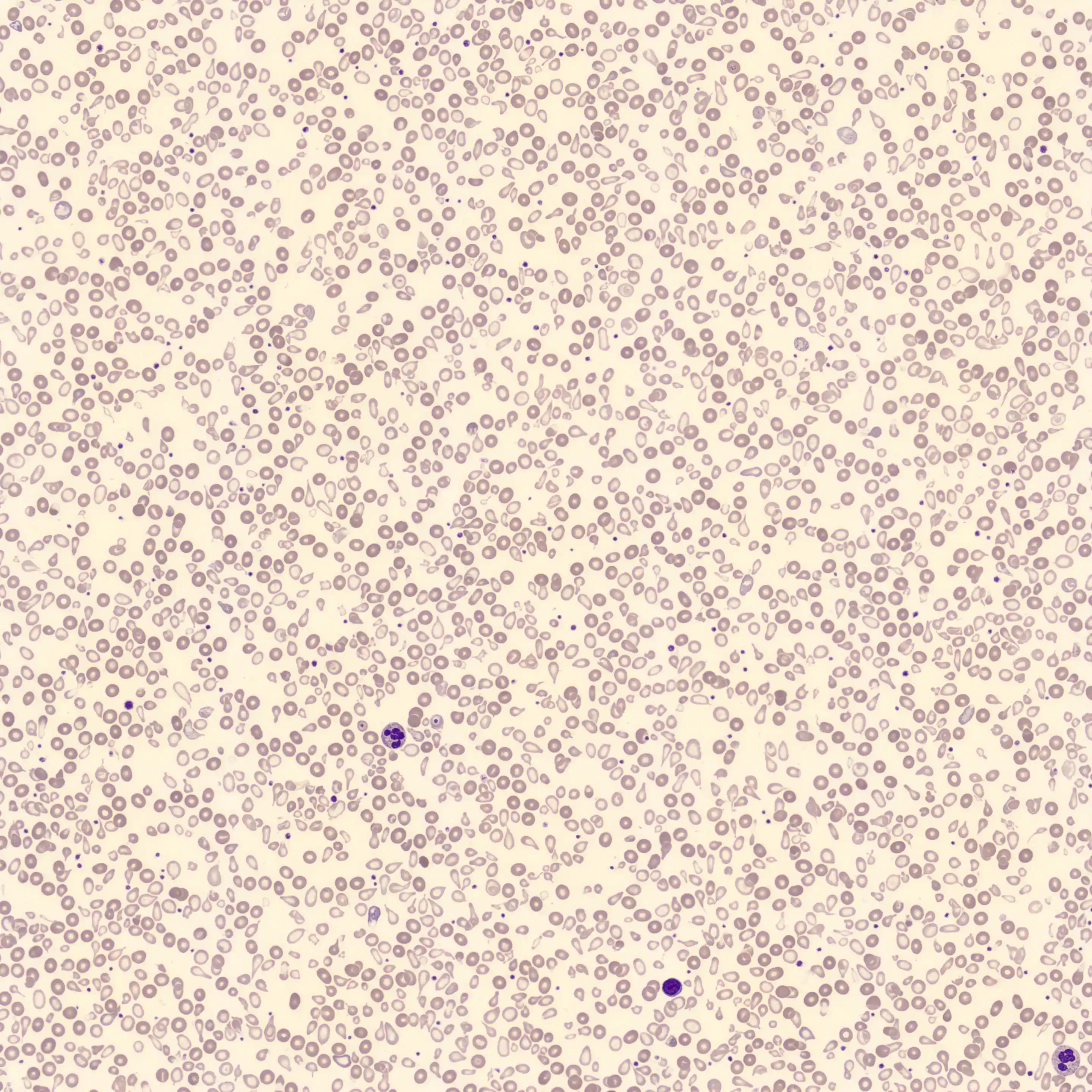
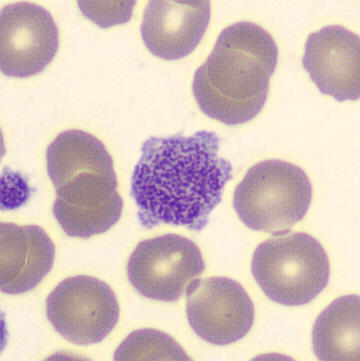
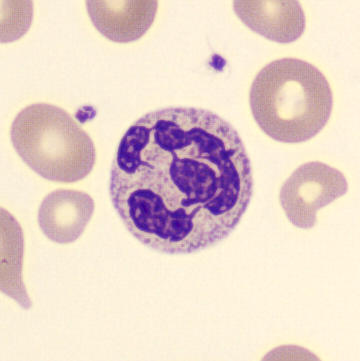

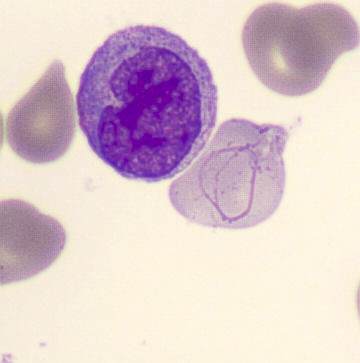
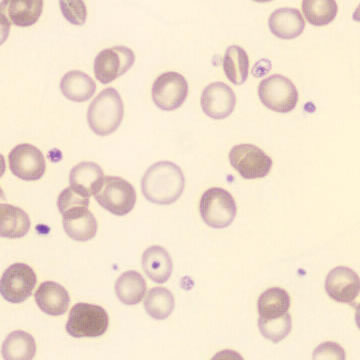
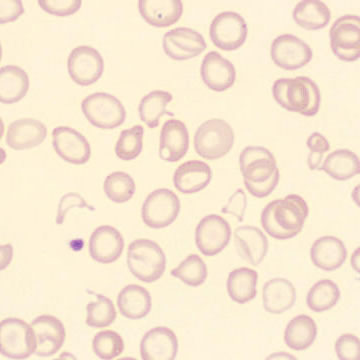
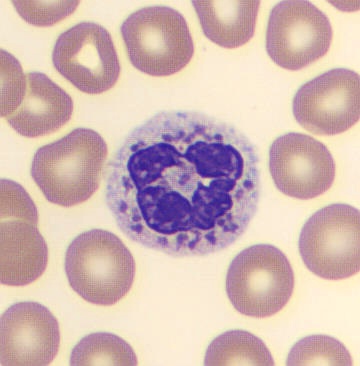

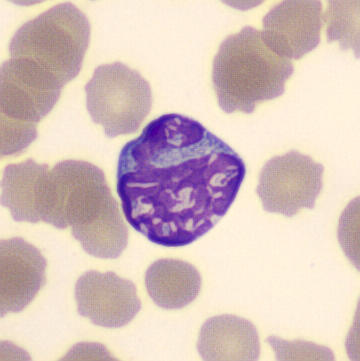
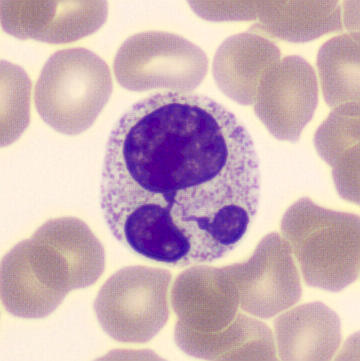
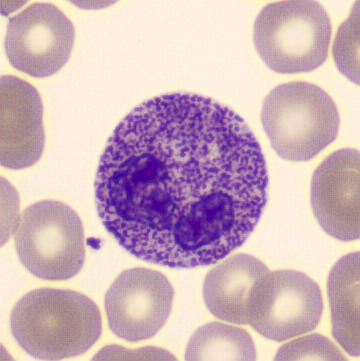
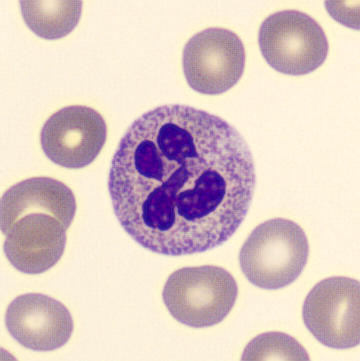
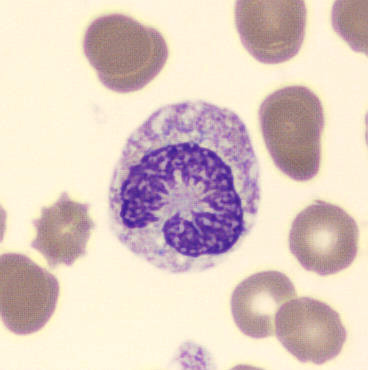
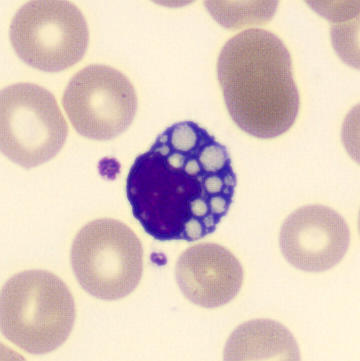

EDTA - Slide 2
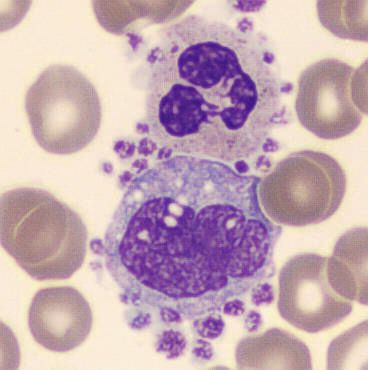
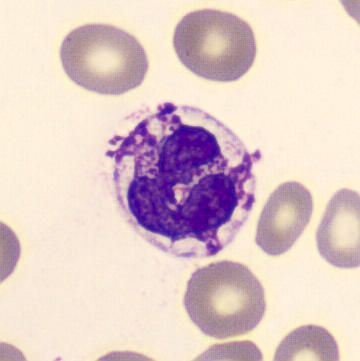
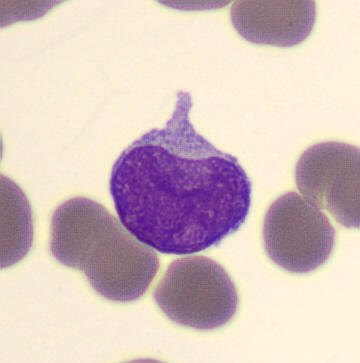
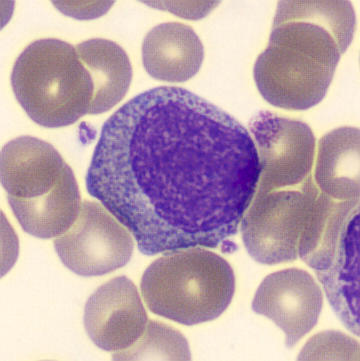
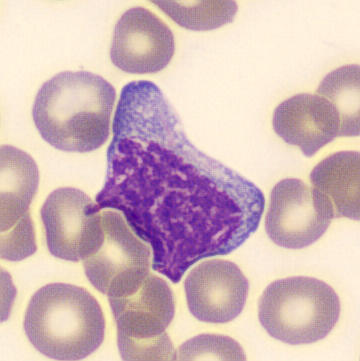
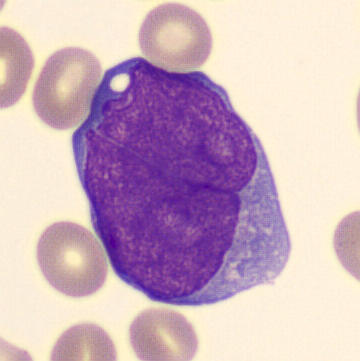
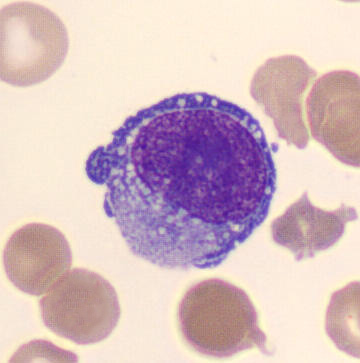
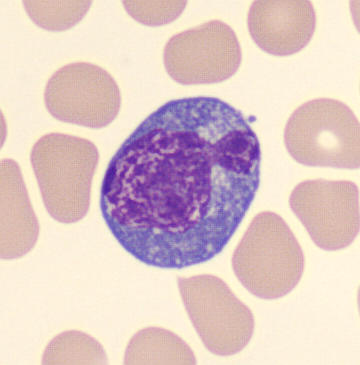
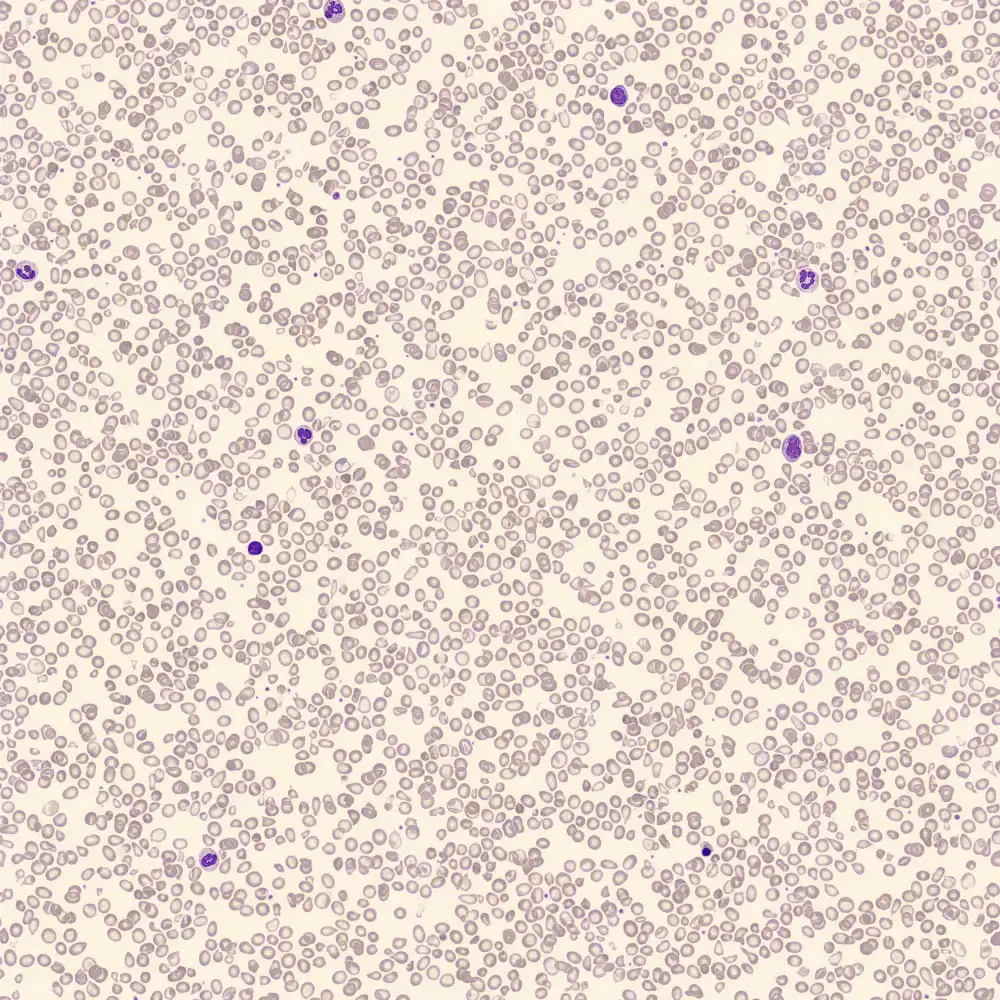
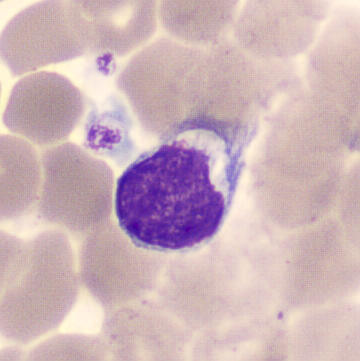
The use of EDTA as an anticoagulant can lead to membrane changes in the platelet and exposure of so-called "crypt antigens. Any autoantibodies present against these antigens can then bind and in turn interact with leukocytes that have a antibody-receptors (such as the Fc gamma RIII receptor, CD16). This causes platelets to stick around the leukocyte, usually neutrophils; this is called "satellitism.
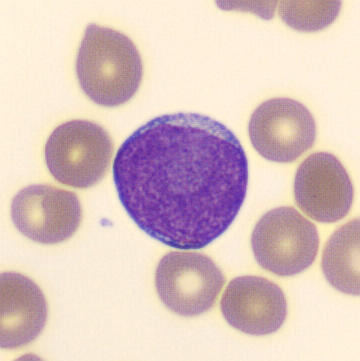
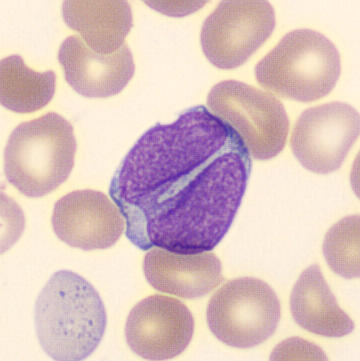
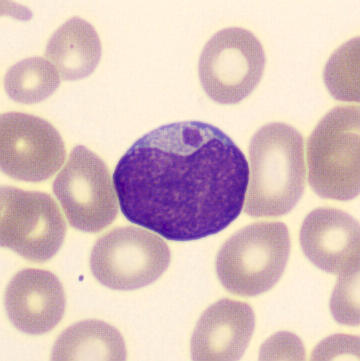
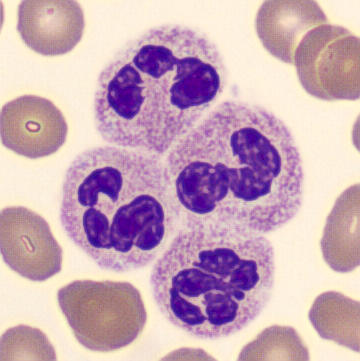
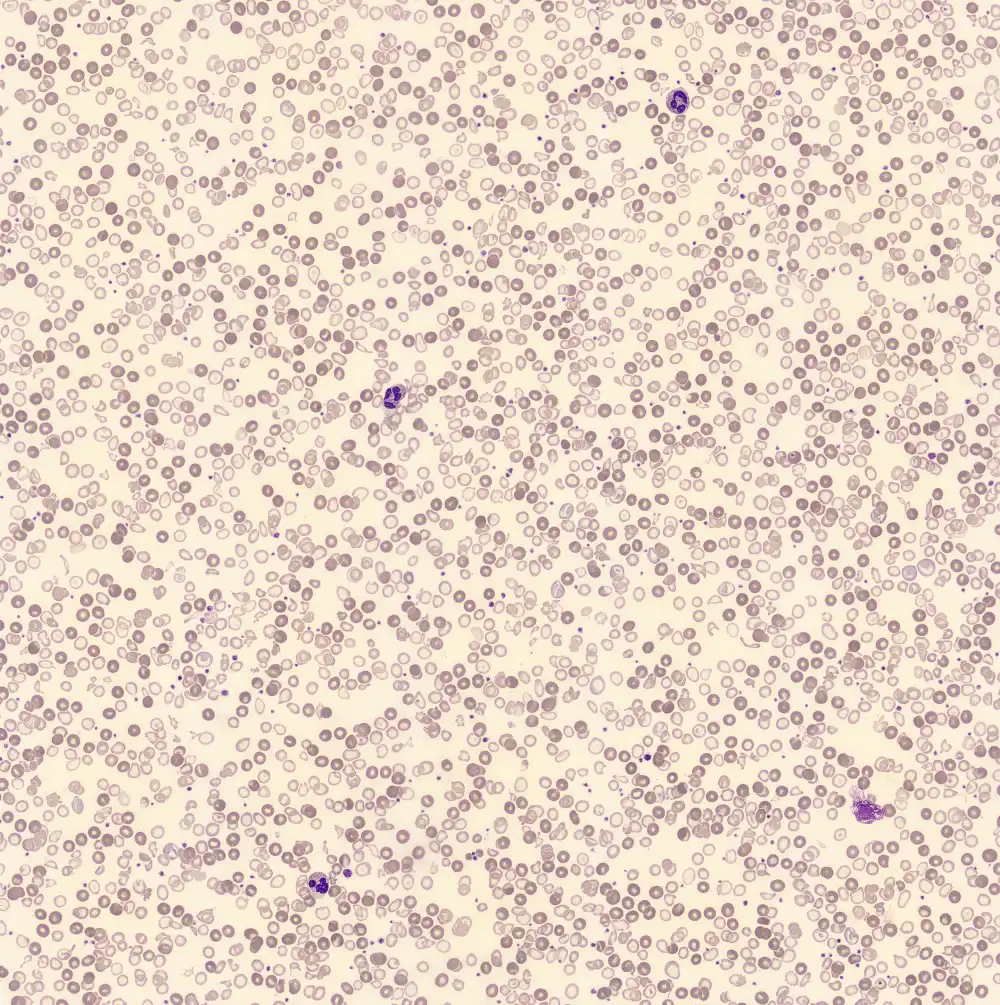
CD16 is highly expressed on mature neutrophils and to a lesser extent on monocytes, eosinophils and NK cells. In this slide, the interaction is so strong that there is also agglutination of leukocytes.
Peripheral blood

Agglutination
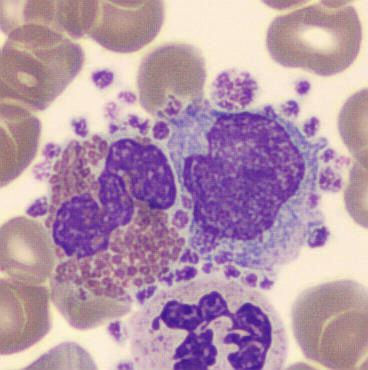


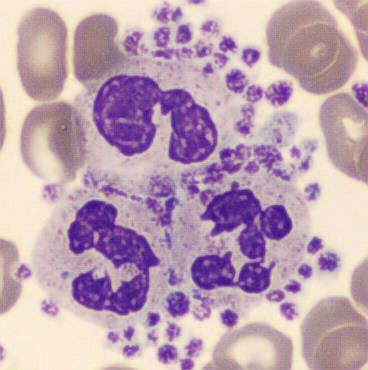
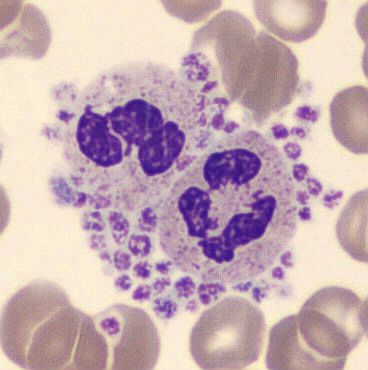


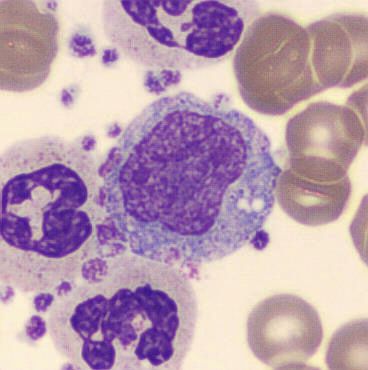


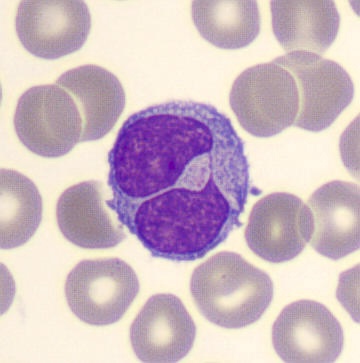
Neutrophils


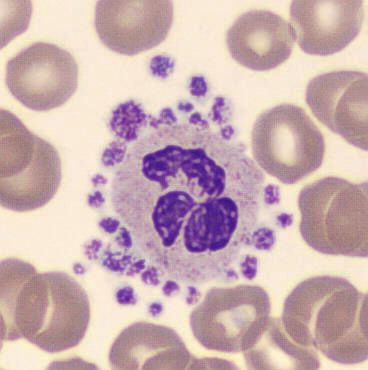


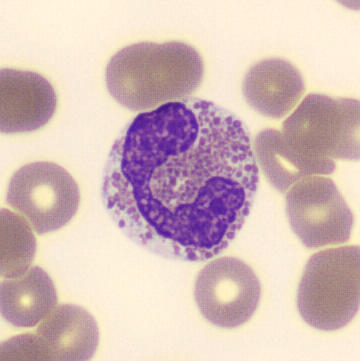
Monocytes